Boisvert Analog Horror Game
Sushi StudiosAdventure
4.4133.00 Reviews
- Version
- 0.3.8
- Installs
- 1.00M
- Age Rating
- Everyone 10+
Screenshots
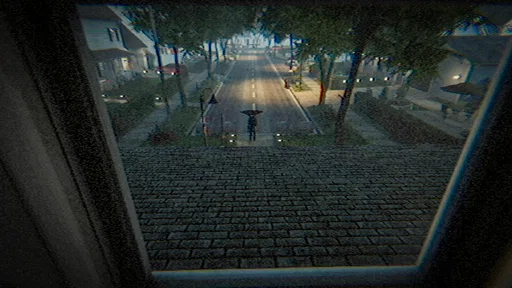
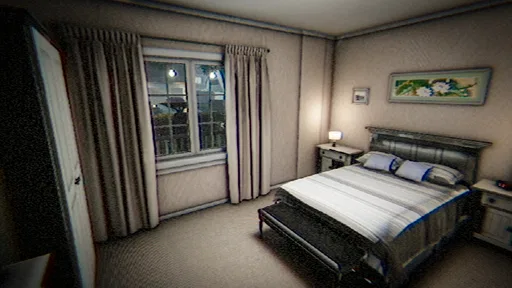
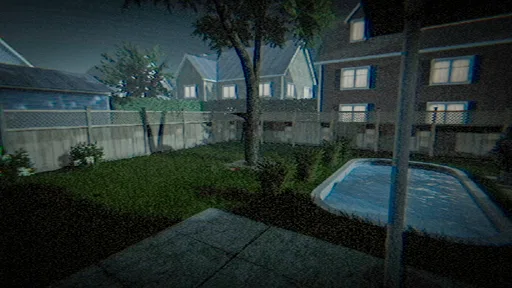
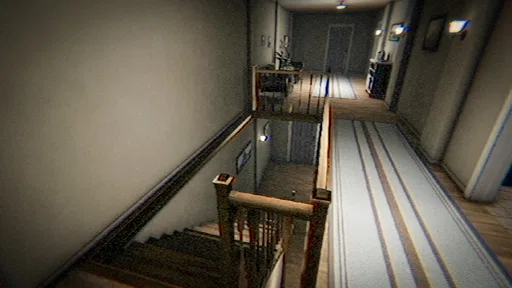
Our Review of Boisvert Analog Horror Game
 Analysis by Appyee
Some horror games try to frighten me with sudden attacks, while others make the waiting itself uncomfortable. Boisvert: Analog Horror Game belongs to the second group. I spent time with it expecting a quick scare-driven experience, but what stayed with me was its VHS-style presentation, uneasy atmosphere, and the way surviving each night becomes a small personal challenge. It is a free adventure game from Sushi Studios, aimed at players aged Everyone 10+, although younger players who are sensitive to creepy imagery may still want to approach it carefully.
The central appeal is easy to understand: you are asked to survive five nights of analog horror rather than simply walk through a conventional adventure. That structure gives the game a clear destination from the beginning. I always knew what I was working toward, but the route there depended on how well I handled the tension and paid attention to what the game was showing me. It is not the kind of experience I would recommend as a relaxing background game. It works better when I can play with headphones, limited distractions, and enough patience to let the atmosphere build.
How the five-night structure creates a reason to keep playing
The early goal is refreshingly direct: make it through the next night. That sounds simple, but the analog-horror format makes the objective feel more personal than a normal level counter. Each session has the mood of an old recording that I am not entirely comfortable watching, and the five-night setup gives the experience a natural beginning, middle, and end. I did not need a large map, a long quest log, or a collection of unrelated tasks to understand why I should continue.
That clarity is one of the game’s strongest design choices. Many mobile adventure games take too long to explain their purpose, filling the opening with menus, tutorials, and decorative objectives. Here, the promise of surviving the full run does much of the work. The question is not whether I will eventually collect a huge set of upgrades; it is whether I can stay focused long enough to read the situation correctly and get through the next stage of the nightmare.
The title’s VHS and creepypasta influences also give the early play a particular flavor. The presentation feels less polished in the deliberately unsettling sense, as if the game wants me to distrust what I am seeing. That visual language is important because it turns ordinary pauses into possible warnings. A quiet moment does not necessarily feel empty. I found myself watching more carefully, wondering whether a strange detail was decoration, a clue, or simply part of the mood.
One useful way to approach the opening is to treat it as an observation exercise rather than rushing toward an imagined action sequence. I initially wanted to move quickly because horror games often reward speed, but Boisvert is more effective when I give its signals time to register. Looking at the screen for a few extra seconds, remembering what seemed normal, and noticing what changes from one moment to the next can make the experience more manageable. That habit is more valuable here than blindly repeating the same input.
What counts as progress when the game is built around survival
The clearest progress signal is reaching another night. That sounds obvious, but it matters because the game does not need to surround the player with excessive reward notifications to make advancement meaningful. Completing a night gives me a concrete sense that I have understood a little more of the game’s rhythm. Even when the reward is mainly access to the next part of the experience, the transition itself carries weight.
I also noticed a second kind of progress: improved interpretation. On an early attempt, an unfamiliar visual or sound can make me hesitate in the wrong way. After spending more time with the game, I become better at separating atmosphere from information. That is a subtle form of progression, but it suits analog horror well. The player’s growing awareness becomes part of the challenge instead of being replaced by a conventional character-level system.
This approach will appeal to people who enjoy learning a horror scenario through repetition. It may frustrate players who want constant visible rewards, equipment screens, or a large collection of unlockable abilities. The game’s progression is tied closely to surviving and understanding the experience, so it does not provide the same satisfaction as an adventure game built around inventory expansion or extensive customization.
A practical tip is to avoid treating every failed attempt as wasted time. I found that a setback can reveal which moments deserve more attention on the next run. Instead of repeating the whole night at the same speed, I would slow down around the point where my previous attempt became confusing. This turns repetition into a deliberate learning process. It also prevents the common mobile-horror problem of tapping through the same sequence without changing anything.
The challenge curve rewards attention more than aggression
The difficulty feels connected to pressure and uncertainty rather than to combat skill. I would not choose this game expecting a deep action system. Its challenge comes from staying alert while the presentation tries to unsettle me. That makes the experience closer to a tense survival puzzle than to a conventional fighting adventure, even though the store category places it among adventure games.
That distinction is important when deciding whether to download it. If you enjoy horror that asks you to observe, remember, and react carefully, the five-night format has a good chance of holding your attention. If you prefer fast movement, constant enemies, or a clear stream of upgrades, the pacing may feel too restrained. The game’s tension depends on uncertainty, and uncertainty naturally includes quiet stretches that some players will experience as suspense while others experience as waiting.
I appreciated that the challenge does not need to become noisy to feel threatening. The VHS-inspired style makes small changes more noticeable, and the creepypasta influence gives the scenario a sense of forbidden context. I often felt that I was piecing together an unpleasant situation rather than simply clearing obstacles. That atmosphere cannot replace strong interaction forever, but within a short survival-horror structure it gives the nights a distinctive identity.
For the best experience, I would play in short, focused sessions rather than trying to force a complete run while tired. Horror loses much of its effect when I am distracted by messages or playing with the sound turned down. It is also easier to recognize the game’s pacing when I let a night breathe. A rushed session can make the experience seem less coherent, while a patient session makes the changes in mood and presentation easier to appreciate.
Why the pacing can pull me forward—and where it may lose me
The five-night goal creates retention pressure without requiring a huge commitment. Once I have completed part of the run, stopping can feel unsatisfying because the remaining nights represent a clearly defined finish line. This is a good fit for mobile play: I can approach the game in compact sessions, but there is still a reason to return rather than treating each launch as an unrelated activity.
At the same time, the structure places a lot of responsibility on atmosphere. If the mood works for me, the quieter sections build anticipation. If it does not, the same sections can feel slow. That is the main pacing trade-off I noticed. The game is not trying to keep me constantly stimulated with new mechanics; it is trying to make me uncomfortable through presentation and expectation. Players should know that before installing it.
The game’s free price makes trying that style straightforward, and in-app purchases are listed at $2.99 per item. I would still approach any optional purchase carefully and decide first whether the core horror loop suits me. A small payment may feel reasonable to someone who enjoys the experience and wants to support it, but it should not be assumed that spending will solve a difficulty or pacing issue. The most important question is whether I enjoy the survival format itself.
Another realistic use case is playing with a friend nearby, not as a multiplayer session, but as a shared viewing experience. One person can watch for visual details while the other handles the controls, then switch roles. That can make the slower moments more engaging and is especially useful for players who enjoy discussing horror clues. It also changes the tone: alone, the game feels more intimate; with a friend, it becomes a conversation about what might happen next.
How it compares with familiar mobile horror alternatives
Compared with a typical jump-scare game, Boisvert is more dependent on buildup and visual discomfort. A jump-scare title can deliver its appeal quickly, but its surprises may lose impact after the first few attempts. Here, the five-night structure gives the tension more room to develop, and the VHS treatment makes the presentation itself part of the horror. I found that more memorable than a sequence built only around sudden sounds.
Compared with a large exploration horror game, this is a more focused commitment. I would not choose it when I want a sprawling world, extensive backtracking, or a long list of side objectives. Its strength is concentration: one unsettling premise, a limited survival goal, and a progression path based on getting through the nights. That focus makes it easier to pick up on a phone, but it also means there is less room for the kind of freedom found in bigger adventure games.
It also differs from action-heavy survival games. Those games often let me overcome danger by improving equipment or mastering combat. Boisvert places more emphasis on reading the situation and maintaining composure. For me, that made failure feel less like a test of reflexes and more like evidence that I had missed something or reacted poorly under pressure. Players who prefer strategy through observation may find that satisfying; players who want power growth may not.
The game has already found a sizable audience, with over one million installs and a 4.4 average from around 9,000 ratings. Those figures suggest that its particular blend of analog horror and short-form survival has broad appeal, but they do not remove the personal factor. Horror is unusually dependent on taste. A game can be well suited to someone who loves VHS distortion and still feel too slow or too mild to someone who wants constant action.
Technical expectations and who should skip it
The current version is 0.3.8, and the game runs on Android 8.0 or later. That makes it accessible to many Android users, though compatibility alone does not guarantee that every device will present the visuals in exactly the same way. Since the atmosphere depends heavily on screen presentation and sound, I would avoid judging it from a rushed launch with low attention. Give the opening enough time to establish its style before deciding whether it works for you.
I would recommend it to players who enjoy short horror arcs, analog-video aesthetics, creepypasta-inspired unease, and goals that can be understood immediately. It is also a good choice for someone who wants a free adventure game that can be played in focused bursts rather than demanding a large open-world commitment. The age label of Everyone 10+ makes it less extreme than adult-only horror, but the unsettling tone can still be uncomfortable for children or anyone sensitive to disturbing imagery.
I would skip it if your priority is competitive play, deep character building, or a generous stream of visible unlocks. I would also look elsewhere if you dislike repeating a night to learn its rhythm. The game’s retention comes from wanting to finish the survival sequence and understand the threats, not from an elaborate progression economy. That is a strength when the mood lands, but a limitation when the player needs more mechanical variety.
One final piece of advice is to keep expectations realistic about what the game is trying to be. The title promises a particular horror format, and it delivers its value through atmosphere, anticipation, and the compact promise of surviving five nights. It should not be judged as though it were a full-scale action adventure. Its best moments come when I allow the strange presentation to do the work instead of demanding a new mechanic every minute.
My verdict on the progression and overall experience
After playing through its structure, I came away thinking that the progression is intentionally modest but well matched to the premise. The early goal is clear, the main progress signal is easy to understand, and the difficulty encourages attention rather than frantic button pressing. The pacing can be slow for players who need constant action, yet that same restraint is what lets the analog-horror style create suspense.
My recommendation is simple: try it if the idea of surviving a short VHS-styled nightmare sounds more appealing than collecting upgrades or fighting through waves of enemies. The free entry point makes the decision easy, while the five-night framework gives the game a satisfying reason to continue. I would play with sound on, take notes mentally when something feels unusual, and treat each failed attempt as information rather than a reason to rush.
For me, Boisvert: Analog Horror Game works best as a focused horror experience with a clear endpoint. It is not the most mechanically expansive adventure game on mobile, and it does not try to be. Its identity comes from the uneasy VHS presentation, the pressure of making it through the nights, and the gradual improvement that comes from learning how to read its world. If that kind of tension is your taste, Sushi Studios has made a compact game worth spending a few attentive sessions with.
Verdict
Strengths of Boisvert Analog Horror Game
- Short sessions make it easy to play in quick bursts.
- Distinctive analog-horror presentation creates a memorable atmosphere.
- Exploration rewards players who pay attention to environmental details.
- Minimalist design keeps the focus on tension and discovery.
- Works well for fans seeking an unsettling, unconventional horror experience.
Limitations of Boisvert Analog Horror Game
- The slow pace may feel frustrating for players expecting constant action.
- Some puzzles and clues can be difficult to interpret without guidance.
- The disturbing imagery may not suit younger or sensitive players.
- Limited replay value once the story and secrets have been uncovered.
- Audio effects can be intense, especially when playing with headphones.
Other Releases by Sushi Studios
View All
Backrooms Descent: Horror Game
Adventure4.6

Backrooms Company Multiplayer
Adventure4.6

The Boiled One: Horror Game
Adventure4.6
Similar Picks in This Category
View All
Roblox
Roblox Corporation4.2

Pokémon GO
Niantic, Inc.3.5

Ninja warrior: legend of adven
TOH Games4.6

Ninja Arashi
Black Panther4.6

Eyes - The Horror Game
Fearless Games sp. j.4.5

Critical Action:Gun Strike Ops
FPS Shooter & Action Game4.3
Frequently Asked Questions
What is Boisvert Analog Horror Game about?
Boisvert Analog Horror Game is an unsettling horror experience built around the visual language of analog horror: distorted footage, cryptic messages, strange audio, and an atmosphere of constant unease. Rather than relying only on traditional jump scares, the game encourages you to investigate its world and interpret what is happening. The story is intentionally mysterious, so players who enjoy piecing together hidden clues may find it especially engaging.
Is Boisvert Analog Horror Game suitable for all ages?
No. Boisvert Analog Horror Game is generally aimed at older teenagers and adults because it can include disturbing imagery, frightening sound effects, psychological tension, dark themes, and scenes designed to create discomfort. The exact intensity may vary depending on the version and device, but parents should review the game before allowing younger players to access it. Anyone sensitive to horror, flashing visuals, or unsettling audio should proceed carefully.
Does the game require an internet connection to play?
The basic gameplay experience may be playable offline after installation, but some functions can depend on the platform or version you download. Internet access may be required for the initial download, updates, advertisements, analytics, or external content. Because requirements can change, it is worth checking the store listing and the permissions shown on your device before installing. Playing with headphones is recommended, although the audio may be intense.
Is Boisvert Analog Horror Game free to download?
Availability and pricing can differ between Android and iOS, as well as between official releases and updated versions. A game may be free to install while including advertisements, optional purchases, or additional content. Before downloading, check the store page for the current price, in-app purchase information, age rating, and developer details. Avoid unofficial modified files, since they may create security risks or provide an incomplete version of the experience.
What should I know about performance and controls before downloading?
Boisvert Analog Horror Game is best enjoyed on a reasonably modern phone or tablet with enough free storage and a stable operating system. Horror games depend heavily on atmosphere, so low brightness, weak speakers, or performance problems can reduce the intended effect. Controls are usually designed for touch interaction, but comfort may vary by screen size. Close background apps if you experience lag, and keep the game updated for the best compatibility.
Play our best games!


